
Vicodin vs Codeine: Opioid Addiction And Risks Involved
- February 23, 2026
- Posted by: olivia
- Category: Drug information
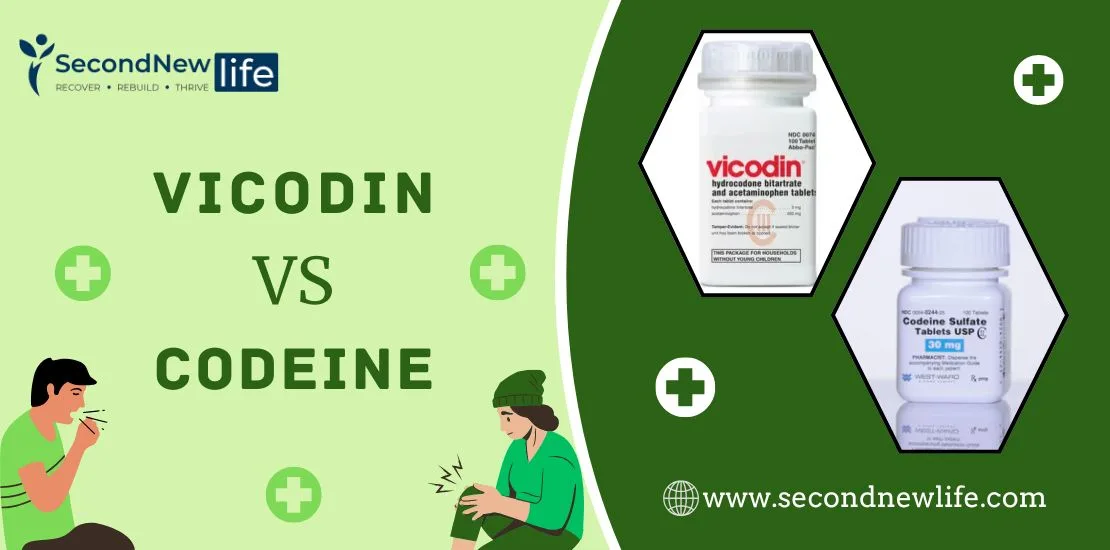
The use of opioids as medications is becoming more and more mainstream serving multiple purposes today. Two opioids that are heavily debated for their uses and results are Vicodin and Codeine. Codeine is used as a first-line medication for coughs and Vicodin becomes useful to treat moderate to severe forms of pain. While these two opioids provide their benefits if used properly, both carry risks that are extremely dangerous for our health. It is very important for people to know which drug is going to affect their health more harshly than the other and that is by comparing Vicodin vs Codeine.
Understanding Vicodin And Codeine
Vicodin
Vicodin is a brand name for the combination drug of the opiate Hydrocodone and the non-opioid acetaminophen. It is an approved painkiller used for mild to chronic forms of pain. Many dub Vicodin as one of the most powerful opioids and as a highly addictive drug. But using it carefully makes it a good pain reliever. Vicodin has a dual mechanism as both of its ingredients work together to provide pain relief. Hydrocodone binds to μ-opioid receptors which triggers the release of dopamine and acetaminophen enhances the effects of the opioid. Acetaminophen also inhibits prostaglandins that often cause pain and inflammation in our body.
Codeine
Codeine is an opioid analgesic that is used for conditions like cough, diarrhea or normal pain. It is mostly mixed with acetaminophen in cough syrups and widely prescribed as one of the best solutions for cough and congestion. Without combination Codeine is prescribed for acute pain and injuries. Codeine is one of the weakest opiates which contributes to its lower affinity with opioid receptors in the system. It only works when it gets metabolized in the liver by the CYP2D6 enzyme and turns into morphine. Only then does it bind with μ-opioid receptors and release dopamine into the brain to eliminate pain and suppress irritating coughs.
How Good Are These Opioid Drugs?
Before comparing and shedding light on the differences or risks of the two drugs we should understand the benefits that people experience after taking the two medications. Doctors prescribe Codeine and Vicodin for the numerous issues they help patients with. This is because of the strength that these two medications carry making them perfect for pain and cough relief. Because of its dual functioning, Vicodin treats severe pains like surgical or post-operative pain with ease. Codeine has an even wider range of treatments that help treat moderate pain, reduce cough and is also prescribed for diarrhea as it is less potent.
Are Vicodin And Codeine The Same?
People might have a wrong notion that Codeine and Vicodin are the same drug due to so many similarities. The composition differs completely between the two drugs as Codeine is a single ingredient drug derived from opium while Vicodin is a combination of an opioid and a non-opioid. But yes, both medications share some notable features like being painkillers. Both are Schedule II controlled drug which makes them highly potent. Codeine and the Hydrocodone in Vicodin have the same mechanism, bind with opioid receptors and release dopamine for pain relief. Another similarity that is found in all opioids is that they share the side effects, both normal and harmful.
How Do These Two Opioids Differ?
A lot of points can be discussed when it comes to the difference between Vicodin and Codeine. We just talked about how different their potencies can be. But stark contrasts can be seen in their composition, mechanism, dosage and even side effects. Here are some points of differentiation that contribute to the discussion of VIcodin vs Codeine.
| Categories | Vicodin | Codeine |
| Composition | Mixture of opioid Hydrocodone and non-opioid Acetaminophen | Naturally occurring substance derived from the opium plant. |
| Drug Potency | Controlled drug under the FDA with high chances of abuse. | Lower risk of abuse than other opioids but it is still a controlled drug. |
| Dosage | 300 mg of the tablet is advised to be taken in a day. | It is advised to be taken at 360 mg per day. |
| Mechanism | Has a dual mechanism of Hydrocodone binding to opioid receptors to release dopamine and acetaminophen inhibiting prostaglandins to stop inflammation. | Does not have enough affinity with opioid receptors to react on its own until metabolized in the liver and turned into morphine to complete the mechanism. |
| Duration | Stays for 4-8 hours per dose and 7-9 hours on extended-release dose. | Has a time span of 4-6 hours in our body. |
| Side Effects | Overdose or misuse poses serious risks of dizziness, drowsiness or depression. | Can cause nausea, vomiting or lightheadedness frequently. |
What’s Stronger, Vicodin Or Codeine?
The answer to this question should have been straightforward and for the most part it is. But as both Codeine and Vicodin are opioids, both carry the risk of a dangerous opioid addiction. In general Vicodin is way stronger than Codeine in many ways. Hydrocodone which is found in Vicodin alone is 7 times stronger than Codeine. This is one of the striking examples of how two medications of the same class can differ so much. But that does not make Codeine “safer” by any means. Comparing the Vicodin vs Codeine strength is just a factual understanding, not an indication of a better remedy.
Side Effects Of Pain-Reliever
The two opiate painkillers share most of their effects, but there is a difference. The risks of Codeine are frequent, short-lived, and can be managed if used properly. But Vicodin triggers some serious risks that can affect us on a long-term basis. But these side effects occur in both drugs and every other opioid if they are misused.
Common Side Effects
- Drowsiness
- Dizziness
- Sedation
- Vomiting
- Nausea
- Constipation
- Headaches
- Confusion
Serious Risks
- Breathing issues
- Extreme sleepiness
- Constricted pupils
- Loss of consciousness
- Seizures
- Hypotension
- Liver Damage
Can You Take Codeine And Vicodin Together?
Doctors believe mixing Vicodin and Codeine is one of the most fatal narcotic combinations and can seriously affect our well-being. Together both Codeine and Vicodin can dangerously slow the breathing. Both are CNS depressants too which can increase sedation in our nervous system if combined and can cause liver damage too. One can easily get addicted to this combination despite its danger. In this situation, the best solution would be to seek professional opioid addiction recovery help. This would involve the medicated detoxification of Codeine or Vicodin and therapies like CBT or counselling. It is better to take the two opiates safely rather than deteriorating your health any further by addiction and overdose.
Vicodin vs Codeine Drug Interactions
One thing about opioids is that they notoriously try to interact with any drug that can be in the system. The same goes for these two, as Vicodin and Codeine have a lot of interactions with other drugs, sometimes dangerous.
Vicodin Interactions
- Oxycodone
- Ambien
- Gabapentin
- Flexeril
- Xanax
Codeine Interactions
- Alcohol
- OxyContin
- Valium
- Pregabalin
- Ativan
Conclusion
Using these two opioid medications remains crucial and is still trusted by doctors Vicodin is especially built to treat pain much more effectively than most of the painkillers. Doctors believe Codeine is one of the best solutions for cough suppression if not the best. It is because of using the drugs against the doctor’s instructions and overdosing on them that these two drugs are dangerous.