
Family Counselling for Addiction Recovery in India — Healing the Whole Home
When someone you love drinks or uses drugs, the whole household quietly rearranges itself around it: checking the phone at 2 a.m., making excuses to relatives, the same argument on repeat. Our family counselling programme, delivered with reputed partner rehab centres across India, gives parents, spouses and children a structured place to understand addiction, step out of the blame cycle and learn what genuinely helps recovery last.
Confidential · No obligation · You can call even if your loved one hasn't agreed to treatment yet.
- For the whole familyParents, spouses, siblings and adult children
- In person or by videoAt partner centres, or remotely for families in other cities
- Part of the full planLinked to detox, rehab, relapse prevention and aftercare
The person in treatment comes home to you.
Who's reaching out?
Every Family Member Carries Addiction Differently
A mother worrying about her college-going son lives a very different story from a wife managing her husband's drinking, or a son in Dubai trying to help his father in Lucknow. Family counselling starts where you are. Pick the one closest to your situation.
When it's your son or daughter
"We gave him everything. Where did we go wrong?"
Most parents we speak with carry two weights at once — fear for their child and a private sense of failure. Often it began with ganja or charas in college, slipping marks, a new friend circle and doors that stay locked. Some parents have already tried the usual moves: cutting pocket money, moving the child to a relative's house, a promise made in front of the family deity. When none of it holds, it isn't because you parented badly. Addiction changes how the brain weighs rewards, and willpower alone rarely wins that fight.
In counselling, parents learn to separate the child from the behaviour, agree as a couple on one consistent response (mixed signals between mother and father are common and costly), and understand the peer pressure their child will face after treatment.
When it's your husband, wife or partner
"I handle the bills, the kids, his mother — and his hangovers."
Spouses often become the household's unpaid crisis manager. You may be hiding empty bottles from the children, covering for missed office days, or answering in-laws who say "thoda adjust karo". Over time your own sleep, health and confidence wear thin. With alcohol, the slide is gradual enough that many couples only recognise it in hindsight — the stages of alcoholism are worth reading together.
Couples-focused family sessions rebuild honest communication, set money and safety boundaries you can actually hold, and prepare you both for life at home after treatment. If your partner is a woman who needs care, our partner network includes women-only rehab options.
Your safety comes first. If there is violence or threat at home, call 112 or the Women Helpline 181 before anything else.
When it's your mother or father
"How do I tell Papa he has a problem? He's the one who raised me."
In Indian homes, questioning a parent can feel like breaking a rule. Yet many adult children are watching a parent's evening drinks grow heavier after retirement, or noticing that Mummy can't sleep without sleeping pills she's taken for years. Prescription drug dependence in older adults is easy to miss because it started with a doctor's slip.
Counselling helps you raise the subject with respect rather than confrontation, coordinate with siblings so one person isn't carrying it alone, and plan medically safe options — older adults often need extra care during withdrawal.
When it's your brother or sister
"My parents spend all their energy on him. Nobody asks how I am."
Siblings are the most overlooked people in an addicted household. Some become the "good child" who never causes trouble; others are pulled in as messenger, money-lender or watchman. Resentment and loyalty can sit side by side, and both are normal.
Family sessions give siblings their own voice, define what is and isn't your job, and turn you from a go-between into an ally. Our guide on ways to help a loved one struggling with addiction is a good place to start.
When you're helping from another city or country
"I'm in Toronto. My brother is in Chandigarh. I feel useless."
Distance adds a special kind of helplessness — time zones, second-hand updates, relatives with conflicting opinions. NRI families and those working in other Indian cities can still be fully involved. Many partner centres can arrange video-based assessments and family sessions, and we help coordinate who is present on the ground for admission and discharge.
Read what to plan for in rehab admission when the family lives abroad, how a video assessment works, and how to keep family visit travel costs manageable.
Why family counselling matters
Addiction Is Lived by One Person and Felt by Everyone
Think of a family as a mobile hanging over a cot: pull one piece and every other piece shifts. When one member is dependent on alcohol, opioids or pills, the others unconsciously take on roles to keep the household balanced.
These roles are survival strategies, not character flaws. But they can also keep the cycle running long after the person has finished treatment. Family counselling helps everyone notice their role and choose a healthier one — which is why clinical guidance such as SAMHSA's TIP 39 on family therapy in substance use treatment recommends involving families in care.
In India's national survey, only about one in 38 people with alcohol dependence reported getting any treatment. For most people, family is the first and often the only support system — which is exactly why equipping families matters. AIIMS–NDDTC survey summary (PIB)
- Stronger support for relapse prevention
- Calmer, clearer everyday conversations
- Rebuilding trust after sobriety
- Boundaries that protect, not punish
- Children who understand it's not their fault
- Carers who sleep, eat and work again
Source for national data: Ministry of Social Justice & Empowerment, Magnitude of Substance Use in India (2019).
Myth vs reality
Advice Indian Families Often Hear — and What Actually Helps
Relatives, neighbours and well-meaning elders all have opinions. Some of that advice comes from love, but much of it quietly delays treatment. Here's what we hear most often in our first conversations with families.
Tap or hover a card to see the realityGet him married. Responsibility will settle him down.Heard in countless homes
Marriage adds pressure, not treatment. Too often a new spouse inherits a problem nobody told her about. Address the dependence first; a healthy marriage is far more likely after real recovery has begun.
Ghar ki baat ghar mein rehni chahiye.Keep family matters inside the family
Secrecy protects the addiction, not the family. Confidential counselling lets you speak openly without the neighbourhood or office knowing — and gives you someone trained to guide what happens next.
Be strict. Stop the money and lock the cupboard.Control will fix it
Control without a plan usually pushes use into hiding — borrowing, selling things, lying. Boundaries do work when they're calm, consistent and paired with an open door to treatment. That balance is exactly what sessions teach.
Detox is done. Now he's cured.The body is clean, so the problem is over
Medical detox clears the body; it doesn't change habits, triggers or relationships. Home is where recovery is tested, so families need a plan for those first months — see aftercare planning.
Counselling is for the addict. Why should we attend?We're not the ones with the problem
You've been living with this too — lost sleep, anxiety, money stress. Sessions are as much for your recovery as theirs. Families who understand the illness respond with less panic and more consistency, and that steadiness supports recovery.
If he refuses rehab, there's nothing we can do.Wait until he hits rock bottom
Waiting for "rock bottom" can be dangerous. Family-training approaches coach you to encourage treatment without ultimatums or force. Read how admission works in India before considering any pressure tactic.
Evidence-based methods
Family Therapy Approaches Used in Addiction Treatment
There is no single "family therapy". The right model depends on who is using, their age, the substance involved and what is happening at home right now. These are the approaches our partner centres draw on, often combined with CBT and individual and group therapy.
CRAFT — when your loved one refuses help
Community Reinforcement and Family Training coaches families, not the person using, to change the way they respond: rewarding sober moments, letting natural consequences happen, and choosing the right time to suggest treatment. It's designed for the most common situation families bring to us — "he won't even talk about rehab."
Often suited to: families whose loved one hasn't agreed to treatmentBehavioural Couples & Family Therapy
Built around practical agreements: a daily recovery check-in, shared positive activities, and clear communication skills. Particularly useful where one partner's drinking has worn down the marriage and both want to rebuild.
Often suited to: married couples and long-term partnersMultidimensional Family Therapy
Works across the young person's whole world — home, school or college, friends and emotions — alongside parent coaching.
Often suited to: teens and young adultsBrief Strategic Family Therapy
A short, focused model that identifies the repeating interaction patterns — who shouts, who rescues, who withdraws — and reshapes them.
Often suited to: adolescents in high-conflict homesFunctional Family Therapy
Moves step by step from engagement and motivation to lasting behaviour change, reducing blame within the family first.
Often suited to: youth with behaviour or legal issuesFamily Psychoeducation & Multi-Family Groups
Structured sessions that explain what addiction does to the brain, the stages of drug addiction, withdrawal, cravings and relapse warning signs. Meeting other families going through the same thing is often the first time parents and spouses stop feeling alone.
Often suited to: every family, early in treatmentFamily Work in Dual Diagnosis & Trauma Care
When depression, anxiety, bipolar disorder or past trauma sit alongside substance use, families need to understand both. Sessions are coordinated with the dual diagnosis treatment programme and, where needed, trauma-informed therapy.
Often suited to: co-occurring mental health conditionsHonest note: not every centre offers every model. Before admission, we tell you which family approaches the recommended centre actually provides, how often sessions happen, and who runs them — so there are no surprises later.
How it works
What Family Counselling Looks Like, Step by Step
Families tell us the hardest part is not knowing what comes next. Here's the usual path, from the first phone call to life at home after treatment. Timings vary by centre and by your loved one's needs.
- 1Day 1
A confidential first call
You talk; we listen. No pressure, no sales pitch — just a clear picture of what's happening and what options exist. Wondering what to say? Read what to expect on your first rehab call.
- 2First week
Family assessment
Substance history, physical and mental health, who lives at home, safety concerns and what the family hopes for. It helps to prepare a substance-use history beforehand.
- 3Before admission
Matching to the right centre
We match your family's needs to a partner centre whose family programme, location and budget fit — see how we help and rehab costs in India.
- 4Early treatment
Learning about addiction together
While your loved one stabilises — often through medical detox — families attend education sessions on cravings, withdrawal and what recovery realistically looks like.
- 5Mid-treatment
Joint family sessions
Guided conversations where hurt can be spoken without spiralling into blame. A counsellor keeps it safe, structured and focused on change.
- 6Before discharge
The homecoming plan
House rules, money handling, medicines, phone contacts, social events where alcohol is served — agreed in writing before discharge, alongside the relapse prevention plan.
- 7After treatment
Aftercare & follow-up
Continued family sessions, support groups and check-ins during the riskiest early months. Details in aftercare planning and our guide to staying committed to sobriety.
Helping or enabling?
Love That Rescues vs. Love That Supports Recovery
Enabling rarely feels like enabling. It feels like protecting your family's izzat, keeping the peace, or stopping a bad night from becoming worse. Yet many protective habits quietly remove the consequences that might push someone towards help.
Flip the switch to see how the same situation can be handled differently. Family counselling helps you practise these responses until they feel natural.
Go deeper: the three C's of dealing with addiction · psychological dependence on alcohol
You call his manager and say he has a fever.
You let him make the call himself, and later say calmly that you're worried about his drinking.
You hand over cash to avoid an argument.
You offer to pay the fee directly to the institution, and only that.
You hope for the best and say nothing beforehand.
You agree in advance on a plan: when to arrive, when to leave, and a sober support person.
You clean up quietly so the children won't see in the morning.
You make sure he's safe, then talk the next day — sober — about what happened.
You invent a story about thyroid or work stress.
You share only what you're comfortable with, without lying to protect the addiction.
You believe it again and drop the topic.
You say you love them, and that you'll believe it when they speak to a professional.
Family self-check
Is Addiction Reshaping Your Home? A 60-Second Check
This isn't a diagnosis. It's a mirror. Tick the statements that have been true in your home over the last few months — the result shows how strongly substance use may already be shaping family life.
Wondering about the person themselves? See early signs of alcohol addiction.
Statements ticked
Nothing you tick is stored or sent anywhere. If anyone is in immediate danger, call 112. For free 24×7 mental-health support, call Tele-MANAS on 14416 (official site).
Session formats
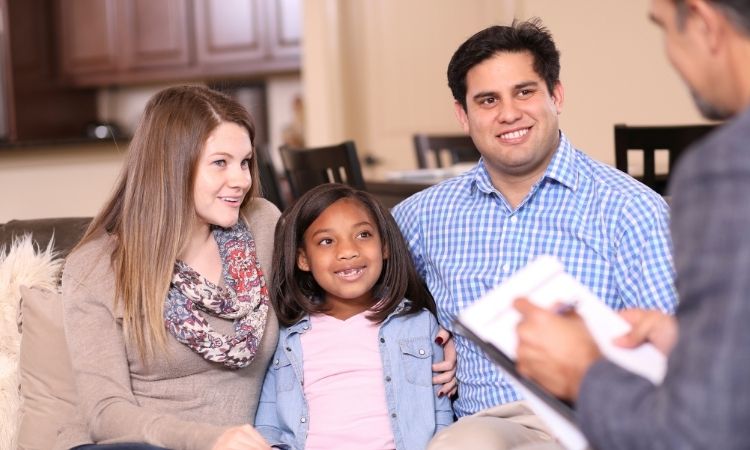
Individual, Joint, Group and Online Family Sessions
Different conversations need different rooms. Most families move through a mix of these formats over the course of inpatient rehab or outpatient treatment.
One-to-one sessions for family members
Space for a parent or spouse to talk honestly about anger, grief or guilt without the loved one in the room.
Joint family sessions
The person in treatment and close family together, guided by a counsellor. This is where repair and planning happen.
Multi-family support groups
Several families learning and sharing together. Hearing "that happened to us too" lifts shame like nothing else. More on group and individual therapy.
Video sessions for distant family
Where the centre offers it, relatives in other cities or abroad can join by secure video, so no one is left out of the plan.
Our partner network
What We Check Before Recommending a Centre's Family Programme
Plenty of rehab brochures promise "family therapy". Fewer can tell you who runs it, how often it happens, or what it covers. Because we work with many reputed rehab centres across India, our job is to ask those questions on your behalf — before you pay a deposit.
If you're comparing options yourself, our guides on warning signs in rehab ads and rehab success-rate claims will help you read between the lines.
Valid registration and licensing
The centre is legally registered to provide addiction treatment. Here's how to verify a rehab centre's registration.
Qualified people running family sessions
Sessions led by trained counsellors or psychologists, not general staff. See checking counsellor qualifications and who does what in a rehab team.
Family work written into the treatment plan
Session frequency and goals appear in a written treatment plan, not just a sentence in a brochure.
Real individual therapy alongside family work
Family sessions complement, not replace, one-to-one care. Here's how to check individual therapy is really happening.
Humane, transparent policies
Clear visiting rules, regular updates for family, and a written restraint and seclusion policy.
Clear fees with no hidden extras
Whether family sessions are included or charged separately is stated upfront — see what's included in a fee estimate.
For families, by our editorial team
Further Reading for Families
Practical guides families ask us for most, written to be read on a hard evening when you need answers but aren't ready to call yet.
The Three C's of Dealing With Addiction
You didn't cause it, can't control it and can't cure it — and why accepting that frees you to help.
Read guide →
Ways to Help a Loved One Struggling With Addiction
Concrete steps for the conversation, the boundaries and the search for treatment.
Read guide →
Rebuilding Trust After Getting Sober
Why trust returns slowly, and how both sides can make the waiting easier.
Read guide →
How to Prevent Alcohol Relapse
Warning signs, high-risk situations and the family's role in the first year.
Read guide →
The Stages of Alcoholism
How social drinking slides into dependence — and where your family member may be right now.
Read guide →
Handling Peer Pressure in Recovery
Old friends, parties and weddings: helping your loved one say no without losing their social life.
Read guide →Questions families ask
Family Counselling for Addiction: FAQs
Didn't find your question? Families often have very specific worries. Ask us directly or browse our full FAQ.
Ask a counsellor →What is family counselling in addiction treatment?
It's a structured form of therapy that involves the people closest to someone with a substance use problem. Sessions help the family understand addiction, improve communication, set healthy boundaries and prepare for life after treatment. It runs alongside the individual's own detox, therapy and rehab programme.
Can family counselling help if my loved one refuses to go to rehab?
Yes. Family-training approaches such as CRAFT are designed for exactly this situation. You learn how to reduce conflict, reward sober behaviour and choose the right moments to suggest treatment. Many families start counselling before their loved one agrees to anything.
Who should attend family therapy sessions?
Usually the people most affected day to day: parents, spouse or partner, adult children and siblings. Sometimes a close grandparent or uncle who plays a big role at home joins too. Young children are usually involved through age-appropriate sessions, if at all. Your counsellor will advise who should be present at each stage.
How many family counselling sessions are needed?
It depends on the centre, the treatment length and your family's situation. During residential rehab, family sessions commonly happen weekly or fortnightly, with more intensive work before discharge. Continuing sessions during aftercare are strongly recommended for the first few months at home.
Is family counselling confidential?
Yes. What you share stays within the treatment team. Your call with us is also confidential and carries no obligation. If something said in a session suggests a serious safety risk, the counsellor may need to act on it, and they will explain that at the start.
Can we attend family sessions online if we live in another city or abroad?
Many partner centres can arrange video sessions for relatives who can't travel. We confirm this before admission. Read our guide on rehab admission when family lives abroad for practical planning.
Does family counselling cost extra?
Some centres include family sessions in the package; others charge per session. We find out and tell you upfront. See rehab cost in India and what to check in a fee estimate.
Can a family admit someone to rehab without their consent in India?
Admission without a person's consent is only permitted in limited circumstances under the Mental Healthcare Act, 2017, with medical assessment and legal safeguards. Be very cautious of any centre offering to "pick up" someone by force. Our guide on how admission works in India explains the options, and family counselling can help you encourage voluntary treatment instead.
What should we do if there is violence at home?
Safety comes before counselling. If anyone is in immediate danger, call 112. Women can also call the Women Helpline on 181. Once everyone is safe, family counselling can include a clear safety plan, and the counsellor will decide whether joint sessions are appropriate at all.
Your family doesn't have to figure this out alone.
One honest conversation is often the turning point. Tell us what's happening at home, and we'll help you understand the options — family counselling, addiction treatment at a partner centre, or both.
- Confidential, judgement-free first call
- Guidance even if your loved one isn't ready yet
- Partner rehab centres with structured family programmes across India
Emergency (overdose, seizure, suicidal thoughts): call 112 or go to the nearest hospital. Free 24×7 mental-health support: Tele-MANAS 14416. Read what families say about us.